
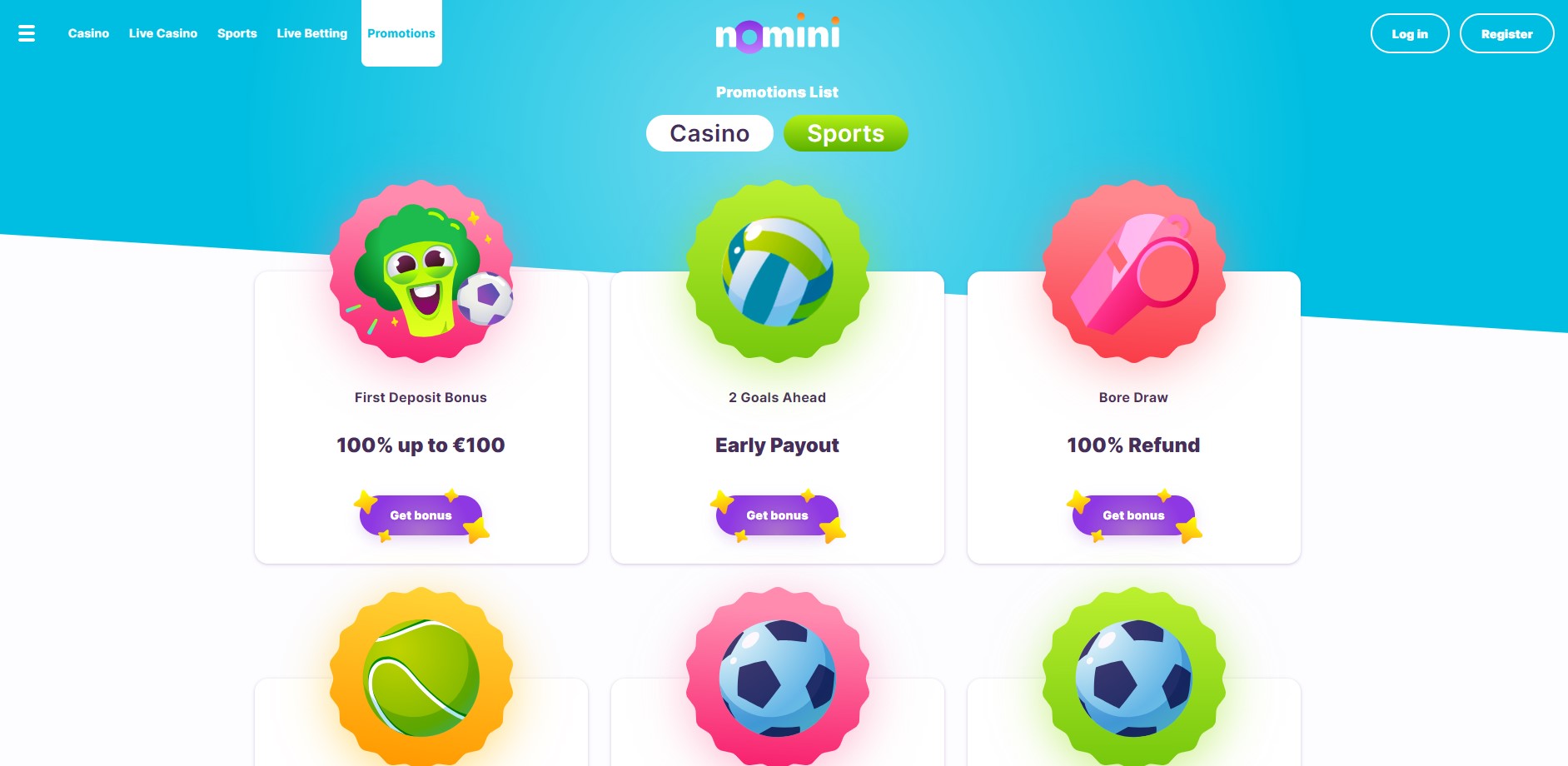
Nomini Casino makes security central to its digital gaming experience nomini-casino.co.uk. Every action on the platform, from account registration to real-money wagers and cashouts, is protected by advanced encryption protocols that meet the highest industry standards. The brand utilizes the latest Transport Layer Security (TLS) and 256-bit AES encryption to make certain that sensitive information remains confidential and tamper-proof. This commitment to data protection is not an afterthought—it is embedded in the platform’s architecture, offering players peace of mind whether they are spinning slots, playing live dealer games, or managing their funds. By keeping pace with evolving cyber threats, Nomini Casino establishes a trustworthy environment where the focus stays on entertainment, not risk.
What Makes 256-bit AES Encryption Is the Industry Gold Standard
AES-256 utilizes a symmetric key consisting of 256 binary digits, generating an astronomical number of possible key permutations—roughly 1.1×10⁷⁷. To put that in perspective, even the most powerful supercomputers would need billions of years to brute-force an AES-256 key. This is the same encryption strength sanctioned by the United States National Security Agency for top-secret data, and it supports secure messaging apps and banking platforms worldwide. Nomini Casino’s choice of AES-256 is therefore rooted in a deliberate strategy to match the most stringent data protection benchmarks, ensuring player data remains unreadable to any unauthorised party.
The algorithm operates through a series of substitution, permutation, and mixing rounds that completely obscure the original message. During a registration or payment sequence, the plaintext is split into chunks, each processed through multiple transformation rounds before appearing as ciphertext. This processing happens locally on the player’s equipment, so the raw data never travels over the network in its original form. The decryption key remains exclusively with the casino’s secure server side, isolated by hardware security modules. This end-to-end encryption architecture means that even if a network segment were compromised, the attackers would gain only encrypted blocks that are mathematically impossible to crack within any meaningful period.
For additional insight, the following comparison demonstrates why AES-256 is the logical choice over shorter key lengths:
- AES-128 delivers 3.4×10³⁸ possible keys—extremely strong, but AES-256 provides an exponentially larger advantage.
- AES-256 endures advances in quantum computing far more effectively than AES-128, making it a future-proof choice.
- The marginal performance cost is negligible on modern devices, so players experience no lag during logins or payments.
Dual-Factor Security and Account Protection
Encryption protects data in transit and at rest, but account safety also depends on robust login protection. Nomini Casino provides optional two-factor authentication (2FA) that adds an extra barrier beyond the password. Once activated, each login attempt needs a time-based one-time code produced by an authenticator app on the player’s smartphone. Even if a password gets compromised through phishing or credential leaks, the attacker cannot access the account without the ephemeral code. This authentication method is highly suggested by cybersecurity experts and is a typical expectation for any service handling financial transactions.
Setting up 2FA requires just a few minutes. Players access the account security settings, scan a QR code with their chosen authenticator app, and validate the setup with a test code. From that moment on, the platform will ask for the 2FA code at every login and for high-sensitivity operations such as modifying the registered email or resetting the password. For those who travel often, backup recovery codes are given and saved securely, so temporary loss of the phone does not lock the player out. Additionally, the casino transmits real-time email and SMS alerts for any account changes, giving users immediate visibility over unauthorised attempts. cbc.ca
To further reinforce account defences, Nomini Casino uses a set of intelligent access controls behind the scenes:
- Login monitoring with geo‑velocity checks that flag impossibly fast location changes.
- Automatic session timeouts after periods of inactivity, requiring re‑authentication.
- Mandatory strong password policies demanding a mix of letters, digits, and symbols.
- Support for biometric login on mobile devices via fingerprint or facial recognition where hardware supports.
Layered Security: Past Encryption
Encryption is simply a single piece of a wider protective framework at Nomini Casino. The platform operates behind enterprise-grade firewalls that check all inbound and outbound traffic, stopping malicious requests prior to reaching the application layer. A web application firewall (WAF) continuously checks data packets for SQL injection, cross-site scripting, and other common web threats, mechanically countering any attack attempt. Additionally, powerful DDoS mitigation infrastructure soaks up and disperses volumetric attacks, ensuring that players can continually access the site lacking slowdowns or interruptions.
Behind the scenes, a security operations team monitors system logs and intrusion detection sensors around the clock. Behavioural analytics identify anomalies—such as repeated failed login attempts from unusual geolocations—and trigger automated lockdowns or step-up authentication challenges. Server operating systems are secured according to Centre for Internet Security benchmarks, with unnecessary services disabled and access privileges confined to the minimum required. Physical servers are placed in ISO 27001-certified data centres featuring biometric access controls, 24/7 surveillance, and redundant power supplies. Together, these physical, network, and application-level defences form a resilient security perimeter far beyond what encryption alone can provide.
The layered security model can be summarised by means of the following protective elements:
- Perimeter firewalls and a cloud-based WAF that block malicious traffic.
- Always-on DDoS scrubbing centres that hold the platform reachable.
- Server hardening and regular vulnerability scanning including automated patch deployment.
- Real-time intrusion detection coupled with human-led incident response procedures.
In what manner Encryption Safeguards All Transaction at Nomini Casino
Whenever a player submits personal information such as name, address, or payment information at Nomini Casino, those details gets instantly encrypted via 256-bit Advanced Encryption Standard (AES). This military-grade cipher scrambles the information into a scrambled form that can only be decrypted by the designated receiver—the casino’s secure server. Even if a malicious actor attempted to intercept the information in transit, they could see merely a meaningless string of characters. The encoding operation takes place in real time, with no noticeable delay for the user. This smooth process is a key element of the platform’s design, ensuring that every login, deposit, and withdrawal are protected in a safeguarding cover that satisfies the same standards used by global financial institutions.
Beyond securing data in motion, Nomini Casino further secures stored information with encryption at rest. Player profiles, transaction histories, and verification documents are stored in encrypted databases that are isolated from public-facing systems. Access to these secure areas is tightly regulated through multi-factor authentication and role-based permissions. This two-pronged strategy—encryption in transit and at rest—builds a robust security posture that leaves no weak point for attackers to exploit. The system’s architecture is frequently refreshed to patch vulnerabilities and adopt the latest cryptographic algorithms, ensuring that the encryption technology never falls behind emerging threats.
To provide players a clearer picture, this is how a typical deposit transaction is secured from start to finish:
- The player logs in via a secure TLS-encrypted session and selects a payment method.
- Payment details, like card numbers or e-wallet credentials, get instantly transformed into ciphertext by the 256-bit AES algorithm within the browser.
- The encrypted payload travels through a dedicated secure channel to Nomini Casino’s payment gateway, which authenticates the request without ever storing raw sensitive data.
- The gateway returns a tokenized confirmation, and the player’s balance is updated over an encrypted connection, with all logs written to encrypted storage layers.
The Importance of SSL/TLS in Safeguarding Personal Data
Secure Sockets Layer (SSL) and its successor Transport Layer Security (TLS) are the foundation of secure communication on the internet, and Nomini Casino implements the latest TLS 1.3 protocol across its entire website. When a player accesses the casino, the browser and server carry out a handshake that establishes an encrypted tunnel. This tunnel stops third parties from monitoring usernames, passwords, or financial details. The existence of a valid digital certificate, confirmed by a trusted certificate authority, ensures that the player is indeed connected to Nomini Casino’s genuine server and not an impostor. This certificate-based authentication is a critical safeguard against phishing attacks and man-in-the-middle schemes that focus on online gaming platforms.
Nomini Casino’s TLS implementation also includes Perfect Forward Secrecy (PFS), which generates a unique session key for each connection. Even if a server’s private key were breached in the future, past encrypted sessions could not be decrypted, because the ephemeral keys are deleted after the transaction ends. This forward-looking protection substantially lowers the long-term impact of any theoretical breach. Combined with strong cipher suites and elliptic-curve Diffie–Hellman key exchanges, the TLS layer guarantees that every page load, live-streamed game round and account change remains shielded by state-of-the-art cryptography.

Players can confirm the site’s security at a glance using visible trust indicators. A quick inspection of the browser address bar displays multiple layers of assurance:
- The address starts with “https://”, showing an active encrypted connection.
- A padlock icon shows that the connection is secure and the certificate is valid.
- Clicking the padlock reveals the certificate details, including the issuing authority and the validity period, which always corresponds to Nomini’s official corporate identity.
Safeguarding Payment Methods with Tokenization and PCI Compliance
When players deposit or request withdrawals funds, the handling of payment data follows an approach that goes well beyond basic encryption. Nomini Casino uses tokenization, a process that replaces sensitive card numbers or e-wallet identifiers with a non-sensitive digital token. This token can be used for subsequent transactions without the original payment details ever touching the casino’s servers. The actual card data is stored only in the secure vaults of a PCI DSS Level 1 compliant payment processor, which is the most rigorous certification in the payment card industry. As a result, even an insider with database access would find only meaningless tokens, not usable financial credentials.
Payment integrations with Visa, Mastercard, Skrill, Neteller, and bank transfer services all operate over encrypted APIs that enforce mutual certificate verification. Every transaction activates a real-time fraud screening that examines velocity, device fingerprint, and behavioural patterns before clearance. If a deposit attempt displays suspicious characteristics, the system triggers additional verification steps without exposing the player’s underlying data. Withdrawal requests take a similarly rigorous path: identity documents, when required, are uploaded over an encrypted channel and stored in an encrypted document management system accessible only by the compliance team, ensuring the entire money-flow cycle stays hardened against data thieves.

Regular Security Audits and Credentials
Nomini Casino does not rely on internal confidence alone; it subjects its security systems to independent scrutiny on a regular basis. Third-party testing houses such as iTech Labs and eCOGRA carry out penetration tests, code reviews, and configuration audits to verify that encryption implementations and overall infrastructure meet the latest best practices. These audits simulate real-world attack scenarios, including attempts to strip TLS, downgrade cipher suites, or exploit known vulnerabilities. The findings are logged, and any recommended remediations are implemented and re‑tested until the system obtains a clean bill of health.
Beyond technical audits, the casino’s random number generator—used to determine game outcomes—undergoes separate certification to demonstrate true randomness and fairness. While not directly an encryption measure, this independent verification of the RNG complements the encryption backbone by assuring players that every spin or card deal is untampered. The test logs, seed generation processes, and hashing mechanisms are all scrutinized by accredited laboratories, and the resulting certificates are often presented on the casino’s fairness page. This transparent stance provides players full confidence that their experience is both secure and genuinely unpredictable.
The key certifications and recurring checks that support Nomini Casino’s security credentials include:
- iTech Labs RNG certification: Confirms unpredictable game outcomes through statistical analysis and source code inspection.
- eCOGRA Safe & Fair seal: Confirms that the operator meets stringent player protection, responsible gaming, and operational security standards.
- PCI DSS Level 1 compliance: Verifies that payment card data is handled, stored, and transmitted according to the highest industry security requirements.
- Quarterly vulnerability scans and annual penetration tests conducted by external cybersecurity firms.